At a former US Army base near the border, a Cold War critique finds its voice in quirky works
PAJU, Gyeonggi Province — Just an hour's drive north of Seoul, the strip of land that cuts the Korean Peninsula in two is where the Cold War lives on.
The 1953 armistice stopped the shooting but never yielded a peace treaty; what it left behind is a roughly 250-kilometer buffer zone of barbed wire and land mines, where soldiers on both sides keep watch around the clock.
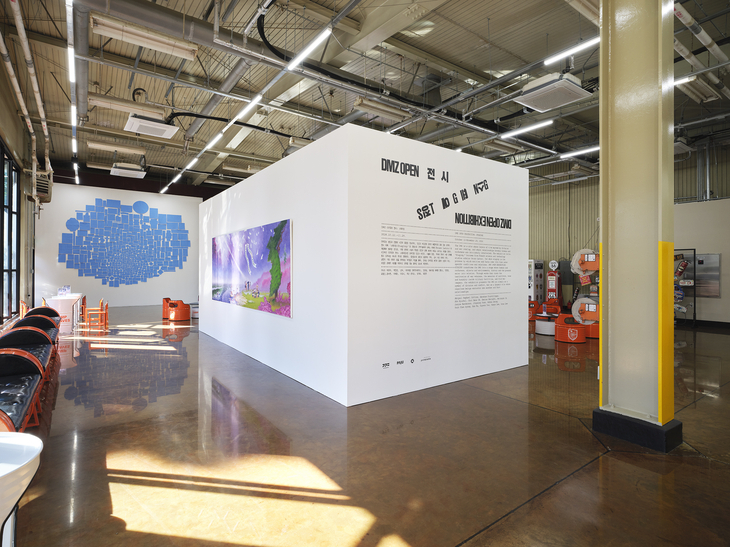
It's hard to think of a more curious setting for a show built around the obscurantist theorizing of Bruno Latour. The late French philosopher argued that Pasteur's microbes only came into existence once labs, instruments and other institutions were in place to "stage" them, all but concluding that reality is whatever whoever’s holding the microscope says it is. That outlandish idea happens to be the central conceit of "DMZ Open Exhibition: Staging," which opened Monday in the restricted border area just south of the DMZ.
Behind the show is curator Kim Sun-jung, artistic director of Art Sonje Center and no stranger to the DMZ as subject matter. Kim launched the Real DMZ Project in the early 2010s and has since taken the border-themed series from Cheorwon to Nottingham and London. This time she recasts the buffer zone as a stage where people, plants and objects have shared space all along.
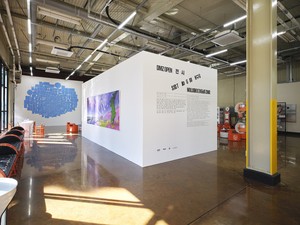
Bringing together 26 works by 14 artists across five venues, the show is part of the DMZ Open Festival, which fills the border area with concerts, talks and occasional marathons each fall. Most of the works sit inside Camp Greaves, a short gondola ride across the Imjin River. The base housed US troops from 1953 through 2004 and has been kept pretty much as the soldiers left it. By now it’s all squat, boxy buildings and rusting window frames, with the drab, cramped feel of life in the barracks kept frozen in place.
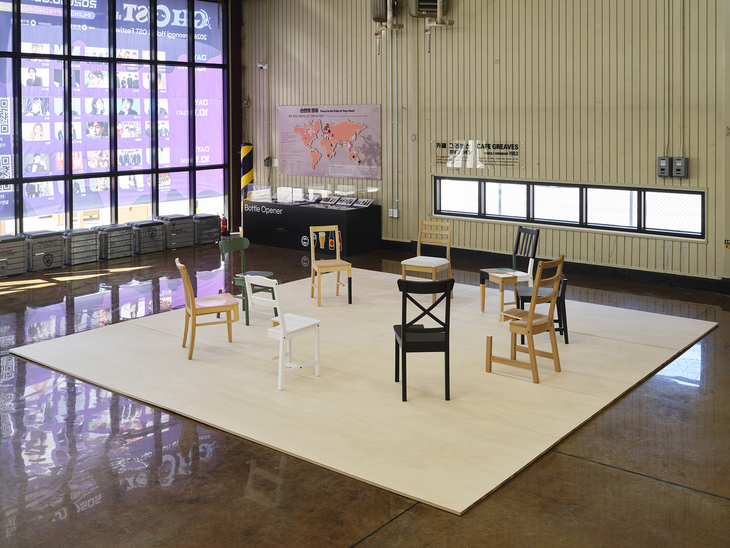
Cafe Greaves, a former maintenance depot turned rest stop for tourists, opens with works about what the division has broken, hidden or distorted.
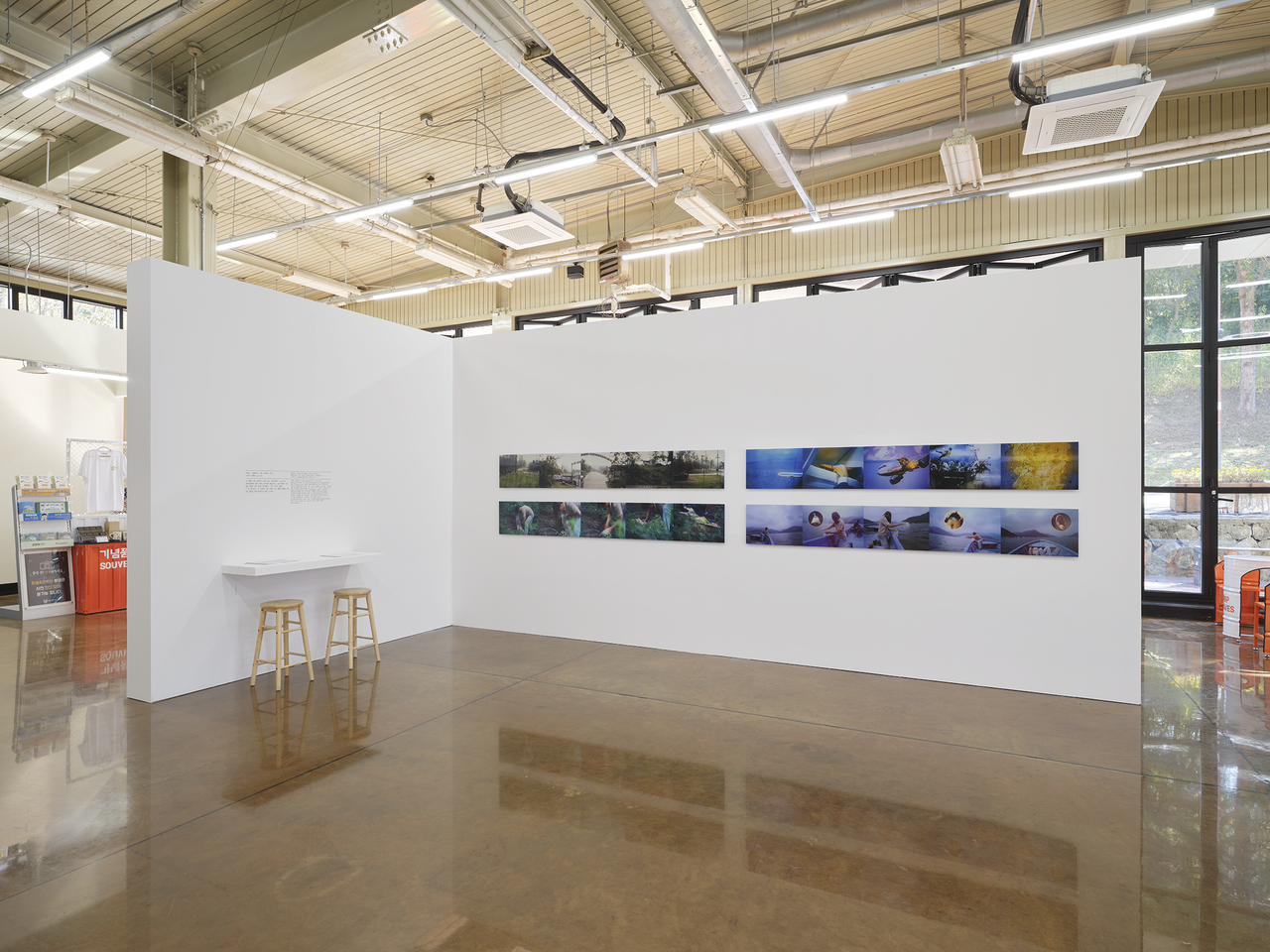
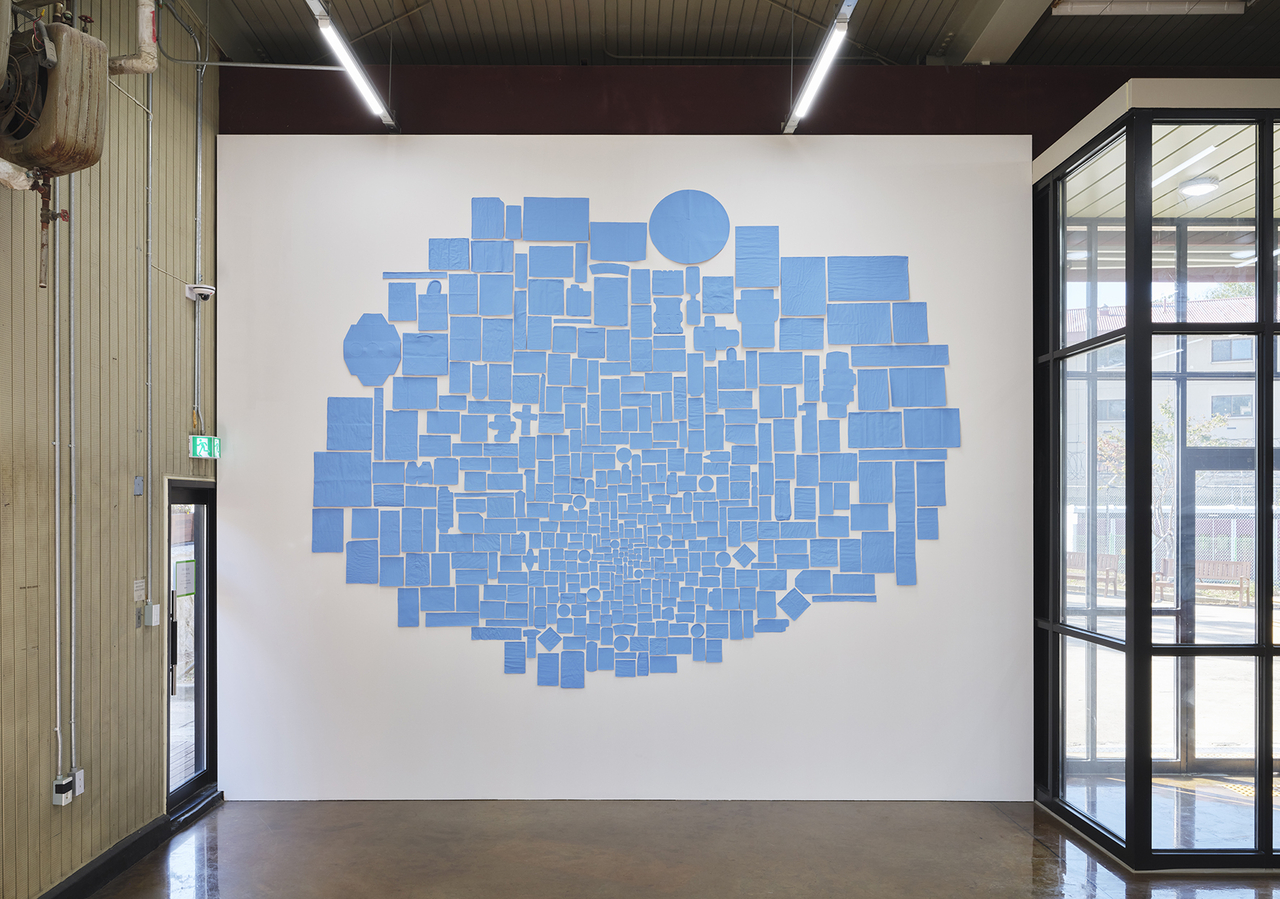
Ahn Kyu-chul has stripped the legs, backrests and seats from eight chairs and pieced a ninth together from the leftovers; none of them fit to sit on. The absurdity is deliberate, Ahn said, and so is the parallel with the DMZ. Park Chan-kyong, younger brother of filmmaker Park Chan-wook, revisits his 1997 debut solo show with staged photos shot from a spy's point of view, all grainy B-movie charm. Across the biggest wall, Abraham Cruzvillegas has pinned up a spiral of printed ephemera he collected on the way from Mexico. Each is painted blue and turned face to the wall, inviting visitors to lift a corner and peek.
A walk uphill leads past buildings scattered across the grounds, including a rusty shower block called Documenta 2, where Yeon Jin-yeong has staged the show’s oddest work, a looksmaxxing-themed bathroom. In a cramped former dorm at Studio BEQ, Denise Bertschi's film turns the camera back on supposedly neutral observers, cut from Super-8 footage shot by Swiss truce monitors.
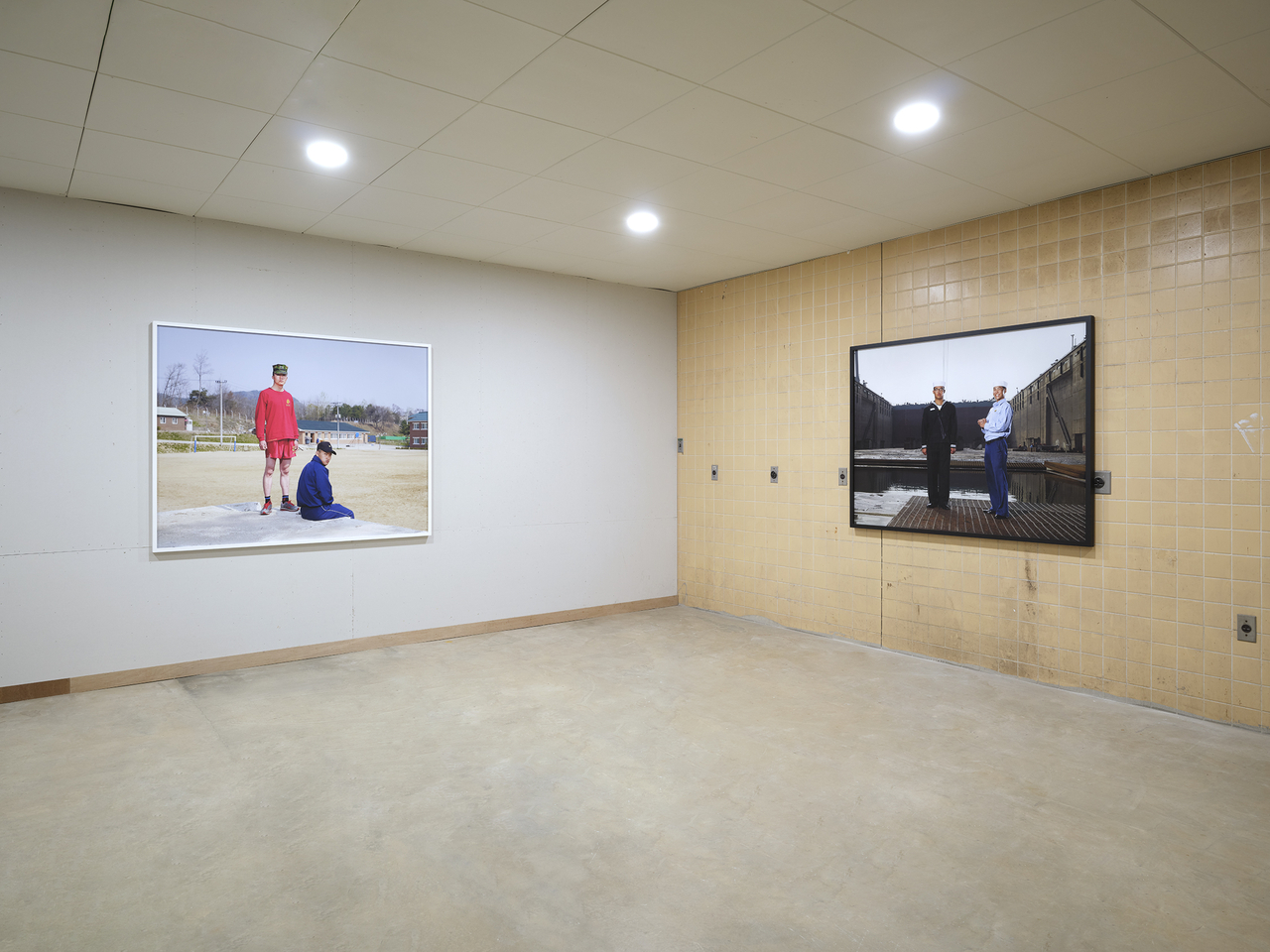
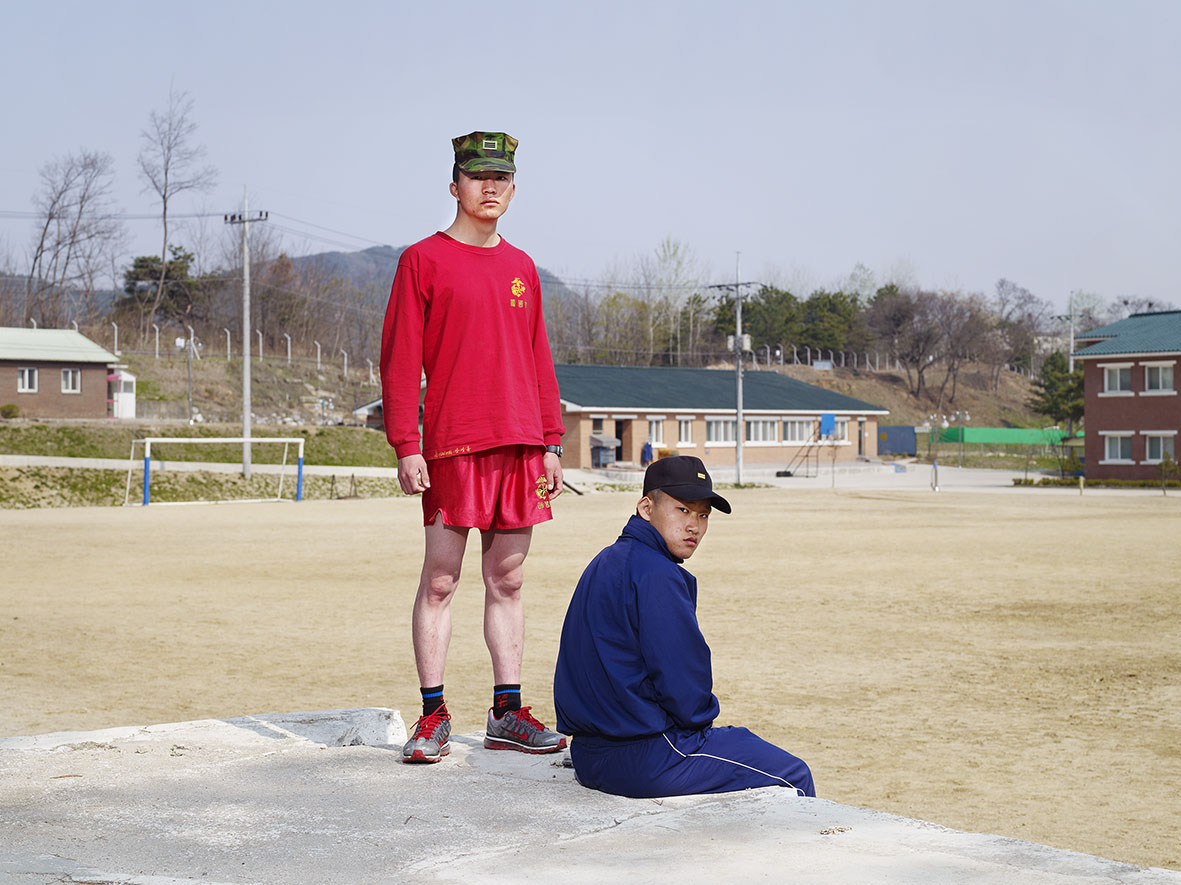
Once a bowling alley for off-duty soldiers, Gallery Greaves houses the bulk of the rest. In a space resembling a locker room hang Oh Hein-kuhn's portraits of young conscripts who have never seen combat yet are trapped inside a system built for it. A small screening room plays Janine Randerson's ecological meditation, narrated from the standpoint of the moss creeping over abandoned bunkers.
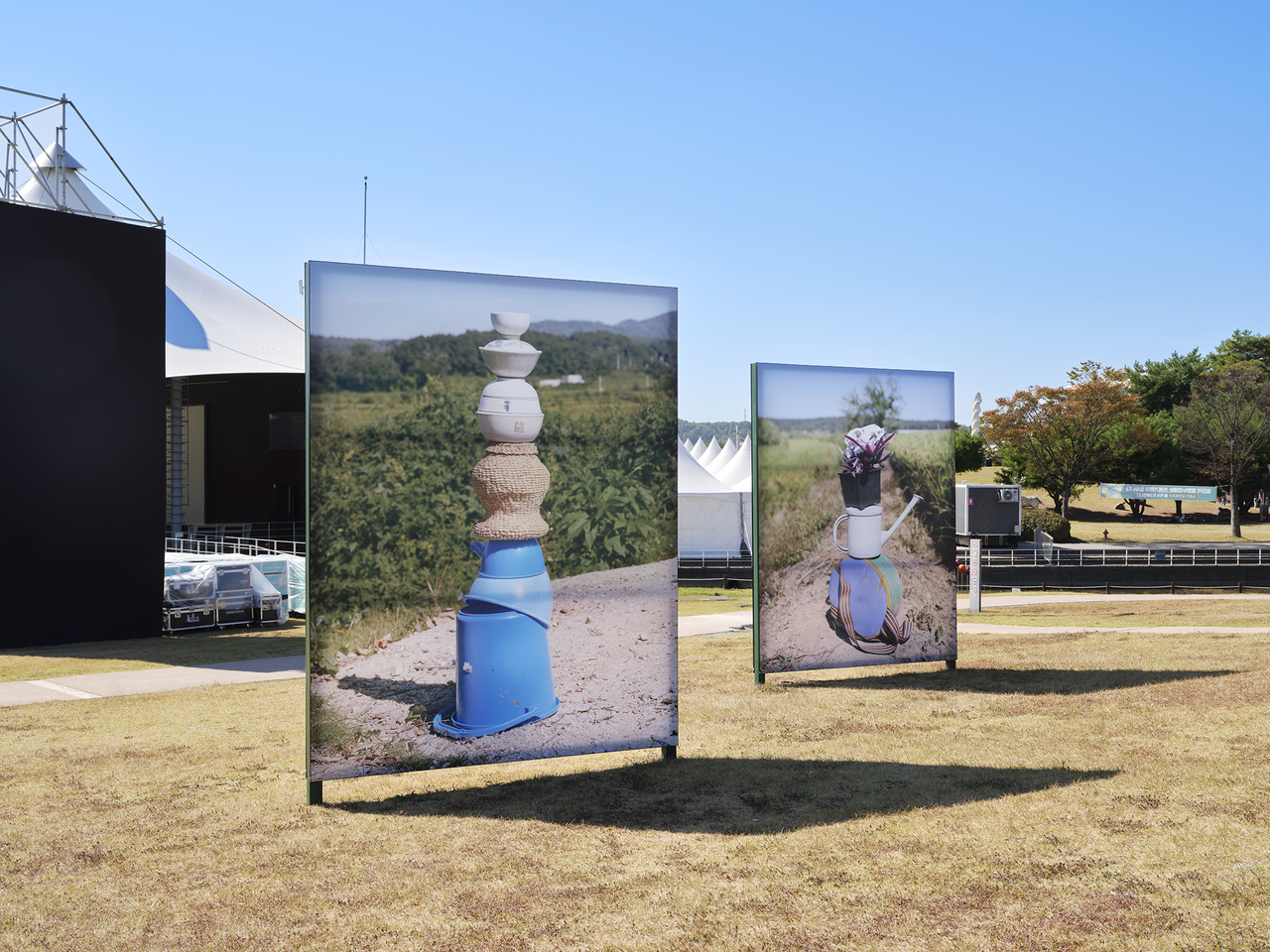
The last stop is Imjingak Pyeonghwa Nuri, a sprawling tourist park where families spread out picnic blankets and candy-colored pinwheels spin in the breeze, just a few dozen meters from rolls of barbed wire. Out on the lawn sits Yona Lee's walk-in cage of steel pipe, which traps traffic lights and bus handles. Lee Ye-eun's towering photo banners stand nearby.
Steering clear of the tidy war-versus-peace binary, the show mostly sticks to the familiar art-world habit of pulling back the curtain on military and state power. One might wonder how well that lens speaks to the present moment, especially since a good share of the works date back a decade or more. The world is a totally different place than it was 10 years ago, one in which borders get redrawn by force and rules bend to the whims of the powerful. Closer to home, talk of division barely registers anymore with everyday Koreans, many of whom have come to treat it as just another fact of life. Picking over Cold War power dynamics in 2026 can feel a little stale when raw power is on open display and largely taken for granted.
Perhaps that's why the show feels most alive in its newest works, which happen to be its quirkiest and most relevant. Yeon Jin-yeong's installation at Documenta 2 takes its cue from looksmaxxing, a fast-growing online subculture of young men bent on maximizing their looks by any means. In an otherwise suffocating space, urinals come decked out in beaded charms and a Birkin-style bag is stitched from army fatigues.
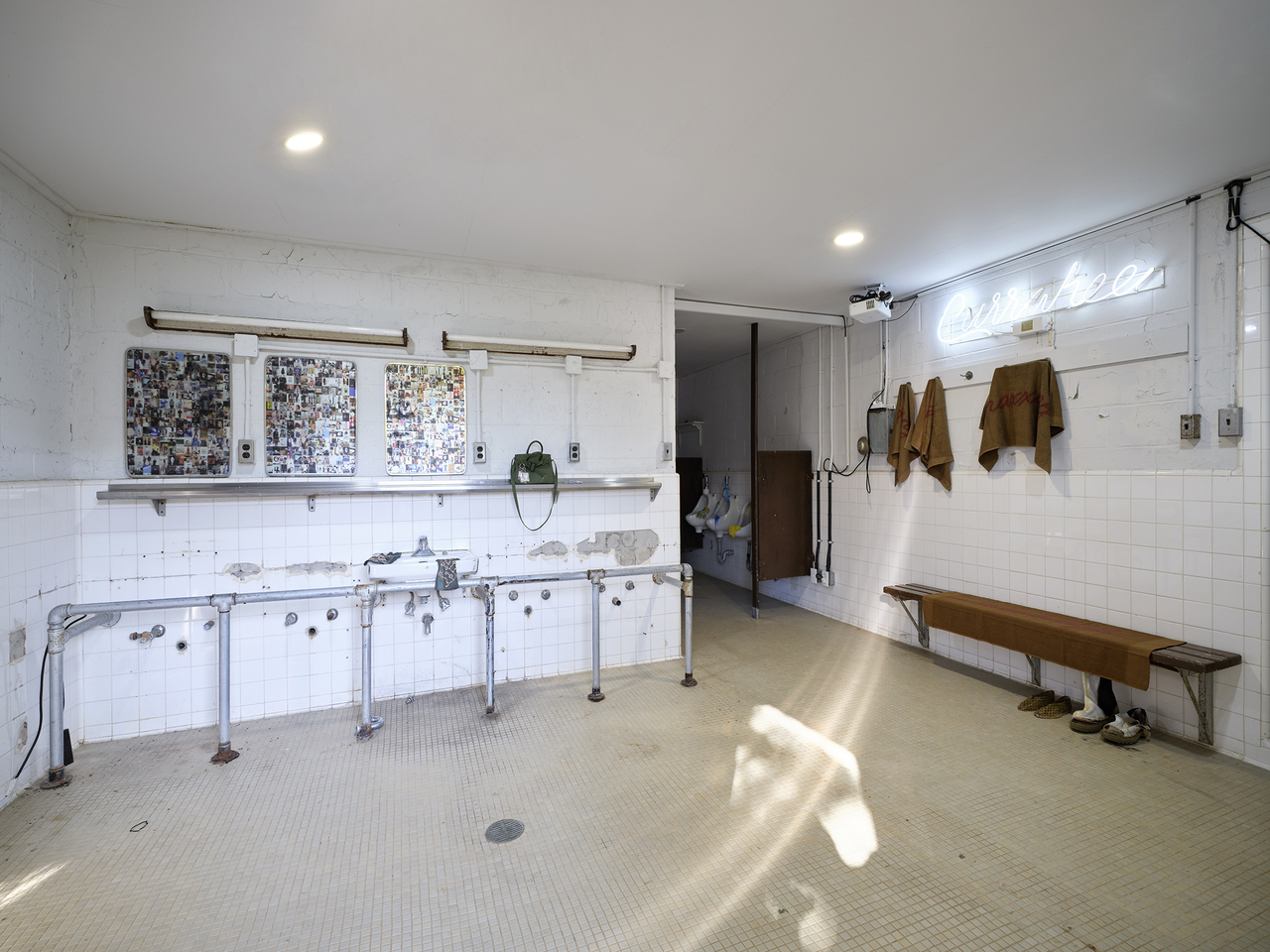
It's a goofy, slightly freaky take on masculinity as the military represents it; it may also be the first Korean artwork to pick up on a trend largely confined to the English-speaking world. Beneath the kitsch lies an astute read on an atomized, everything-is-vibes era of today, when libidinal energy turns inward onto one's own selfie and social media feed rather than outward toward politics or history.
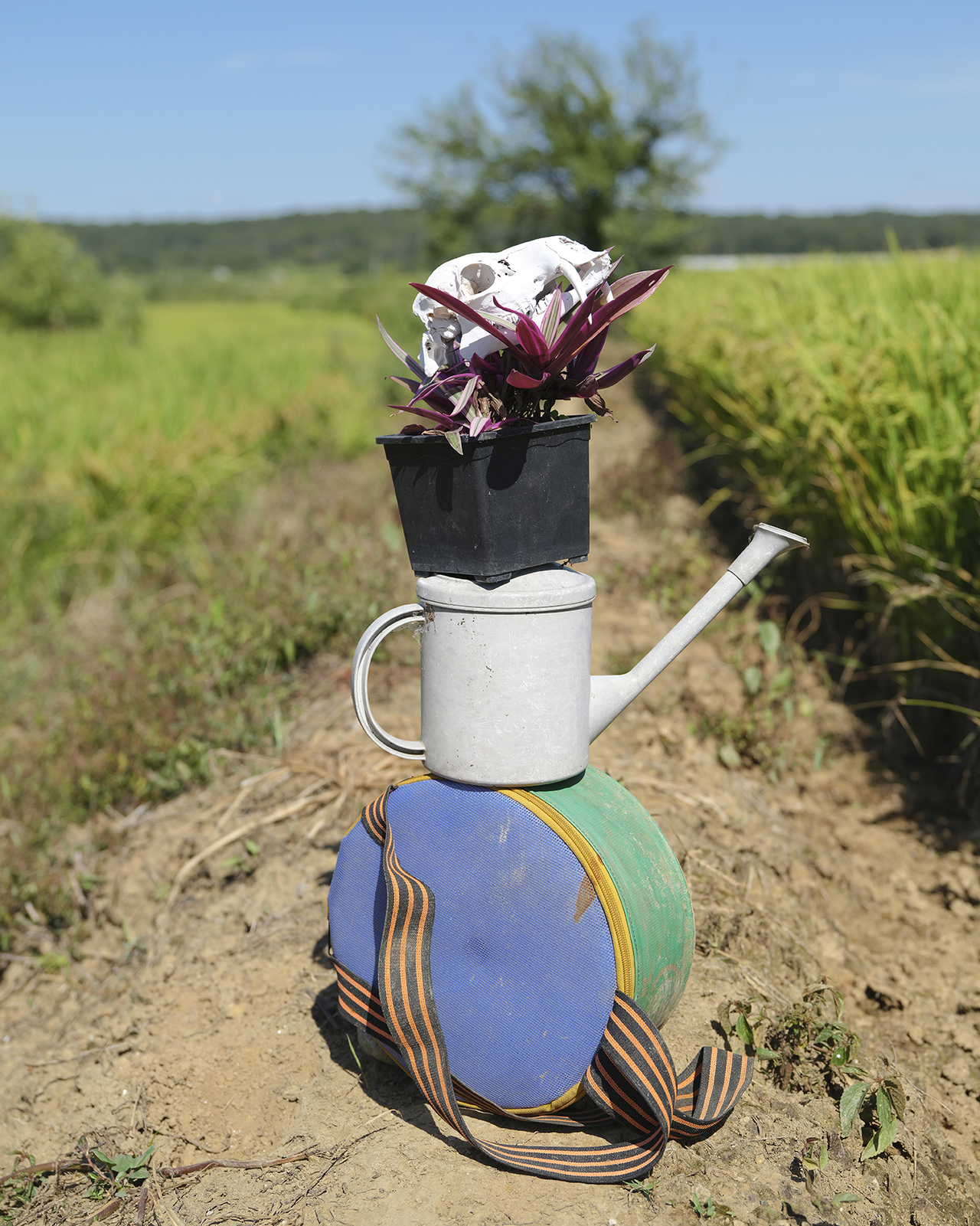
Lee Ye-eun's photos out in the open fields find the political in the personal, too. She asked residents of Tongilchon, a farming village set up near the border in the 1970s, to lend her the small things they work with every day. Then she stacked them into teetering towers on their land. Whimsical in their unexpected modesty, the pictures put the labor of ordinary people at the center of a landscape usually framed by politicians and generals.
"DMZ Open Exhibition: Staging" is at Camp Greaves and Imjingak Pyeonghwa Nuri in Paju until Nov. 29.
moonkihoon@heraldcorp.com